
In recent years, hard turning has gained momentum as a cost-efficient and flexible alternative to grinding. Hard turning is a machining process used to finish special materials – such as hardened steels or titanium alloys with hardness values above 45 HRC (Rockwell scale) – directly on a lathe. Instead of relying on grinding, hard turning removes material using geometrically defined cutting edges, most often cubic boron nitride (CBN) or advanced ceramic tools. The process is especially common for rotationally symmetric parts such as shafts, gears, and bearing components, where high dimensional accuracy and excellent surface quality are required.
What makes hard turning particularly demanding is the combination of extreme material hardness, high cutting forces, and elevated temperatures in the cutting zone. While highly productive, hard turning poses significant challenges in maintaining tool life, ensuring consistent part quality, and minimizing downtime. To meet these challenges, advanced tool and process monitoring solutions are required to enable predictive insights, process stability, and autonomous machining.
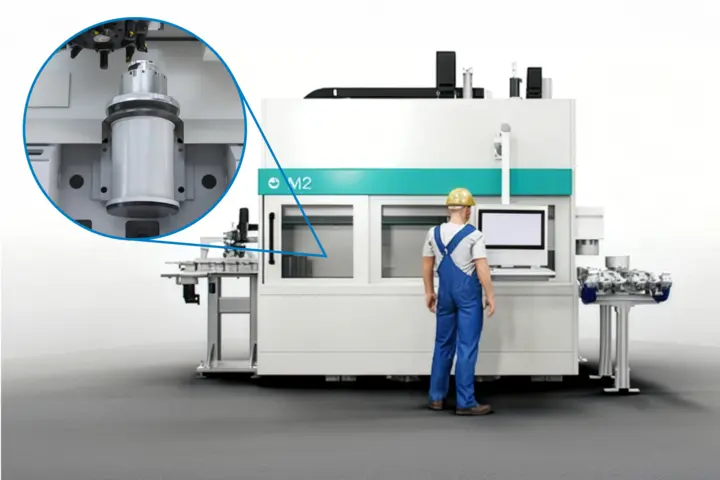


![[object Object]](https://assets.kistler.com.cn/SAPCommerce_CMSTeaser_560x375/piezo-tool-system_52203.webp "Tool and process monitoring systems for machine tools")
![[object Object]](https://assets.kistler.com.cn/SAPCommerce_Document_Preview/962-174e.webp "Hard turning by Minganti: Kistler supports automated CNC machining with integrated tool monitoring")