Durability testing: FAWER Y-TEC relies on Kistler for electric vehicle chassis test bench


Chinese automotive supplier FYCS (FAWER Y-TEC Automotive Chassis System Co., Ltd) stepped up its R&D capabilities with a 17-channel axle-coupling test bench for chassis development – applying wheel force transducers, accelerometers and a DAQ system from Kistler to achieve highest data quality for electric vehicle durability testing and beyond.

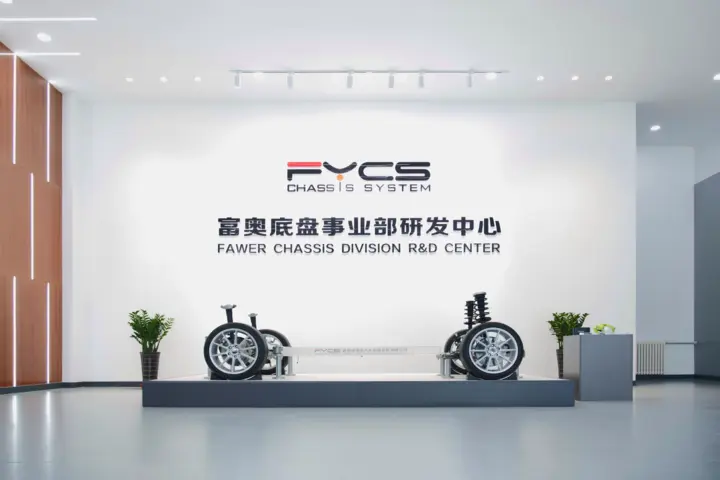
FAWER Y-TEC (hereinafter referred to as FYCS), with its headquarters and R&D center in Changchun, was established in 1998 as an automotive parts company specializing in R&D and manufacturing of key chassis components such as the front and rear vehicle subframes. It has a total of four production bases, amongst other places in Qingdao (Shandong), Chengdu (Sichuan), and Hefei (Anhui). As of 2025, the company has more than 1,500 employees, an annual revenue of 3.7 billion yuan, and an overall subframe production capacity of 2.6 million sets per year. FYCS products are not only widely used in traditional joint venture brand models, but they also receive good market feedback in domestic high-priced models – including emerging brands that are leading competition in the domestic high-end pure electric vehicle market.

FAWER Y-TEC is a Chinese leader in chassis development and durability testing, also for electric vehicles.
FAWER Y-TEC Automotive Chassis System Co., Ltd (FYCS) ist ein führendes chinesisches Unternehmen für Fahrwerksentwicklung und Betriebsfestigkeitstests, besonders für Elektrofahrzeuge.

Chassis development and production aligned with OEM performance and safety needs

FYCS has extensive experience in both chassis development and production. It can be the answer for OEMs to meet both weight and safety requirements – including all structural components such as front and rear subframes, control arms, trailing arms, tie rods, etc. Chassis components are crucial to a vehicle’s overall driving experience and safety, and they significantly influence the handling performance. Li Ye, who is Chief Engineer of the Experimental Center of the Chassis Division at FYCS, joined the company in 2020 and has nearly ten years of experience in automotive parts testing management. He reports: “Our advantage is that we have a modular chassis structure kit that we can adjust to our customers’ vehicle requirements: from dynamics development and structural design over CAE analysis and material selection to durability testing and eventually large-scale production – we offer service packages that cover the entire development cycle.” An R&D team of about 50 people supports customers with breaking down their various requirements into key indicators, irrespective of how specifically the OEMs define their own vehicle types, wheelbases, axle loads, and tuning styles.

Advanced chassis development for electric vehicles

Given the rapid trend towards electrification, FYCS is also facing new challenges in supporting and testing structural chassis parts for electric vehicles: First, the application of new technologies in key systems such as drive motors, battery packs, steering, and suspension will all affect the layout space and design focus of the subframe. Second, lightweight design requires cross-functional collaboration including material selection, wall design, and welding processes. The results must ultimately be verified for durability at the component or system level in the test center. Regarding the changes brought by electric vehicles, Li Ye adds: “For emerging manufacturers with less experience in chassis technology, we offer support in the formulation of their test standards, providing key suggestions and directional guidance in the process.”

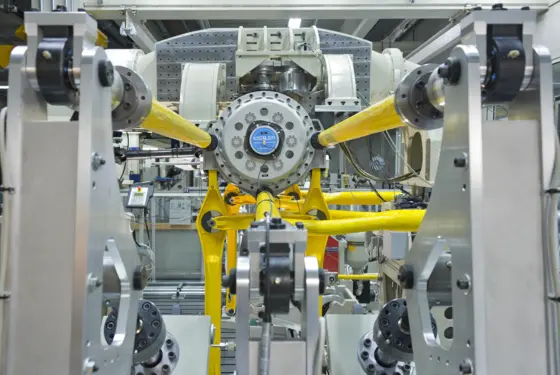
In order to simulate system-level durability testing conditions which are closer to the clients’ operating conditions, and to provide users with more comprehensive testing services, the laboratory team at the FYCS R&D Center projected a 17-channel chassis test bench for suspension systems back in 2021. The system has been fully operational since the beginning of 2024 and includes application-specific measurement technology from Kistler. It provides rapid validation of chassis development and testing services for the front and rear axles and key components of the automotive chassis system, with reference to multiple dimensions such as fatigue life, load collection, connection verification, kinematic verification, and salt spray corrosion testing.

State-of-the-art chassis test bench for durability testing

Yu Ruifeng, Technical Director of the R&D department, adds: “This equipment greatly enhances our durability testing capabilities and helps the team controlling the quality and effectiveness of components for the entire product chain – ensuring the expected performance, durability, and service life both individually and in combination.” The chassis test bench has got the following features:

  • Sensor design: high rigidity, high modal, large inertia reaction support
  • Test bench vibration isolation system: ≤0.8 Hz
  • Test frequency: up to 80 Hz
  • Performance enhancement kit: high-precision, lightweight load transfer path
  • Adjustable wheelbase: 1200-1900 mm
  • Load channels: 17 channels
  • Degree of freedom: vertical, longitudinal, braking, lateral, roll, toe, steering, engine mount
  • Electronic control interfaces: CAN, analog and EtherCAT
  • Environmental testing: salt spray corrosion test system

A measuring chain from Kistler – including RoaDyn S660 six-component wheel force transducers, 8396A accelerometers and DAQ system dedicated to durability testing – plays a key role in collecting experimental data. With its digital interfaces and highly modular expansion capabilities, the system not only permits high-precision synchronous acquisition of six components of the wheel center force but can also seamlessly integrate various types of sensors (such as strain gauge bridges, displacement sensors, accelerometers for NVH and durability testing, driveshaft torque sensors, etc.). In this way, FYCS continuously improves the integrity and reliability of experimental data subject to complex operating conditions.

“Kistler sensors offer excellent interference suppression and long-term stability. They maintain measurement accuracy even at high speeds, high loads, or when subjected to extreme temperatures. This is vital for the high demands posed to data quality in vehicle durability testing and chassis performance development”, Yu Ruifeng emphasizes.

Thanks to the flexible chassis test bench configuration and the integrated salt spray simulation system, the R&D team at FYCS is now able to reproduce the end user's driving scenarios in a variety of environments more realistically – especially regarding the suspension system's response to corrosion, vibration, and complex load coupling. This comprehensive durability testing capability provides solid data to support claims regarding vehicle durability and safety assessment.

Going forward, FYCS will continue to promote a smart and digital construction of its testing system, further integrating virtual simulation and physical test platforms, and build a more efficient “digital twin” verification environment. At the same time, the team is going to expand its predictive analysis capabilities based on big data, and they strive to automate the testing process and improve testing accuracy. Relying on Kistler measurement technology for electric vehicle durability testing, FYCS is moving towards technological leadership in the fields of vehicle performance development, fatigue life prediction, and new chassis architecture evaluation.

需要咨询?

只需点击一下鼠标,我们的专家就会出现在您面前。

Learn more about