
There’s plenty going on in space: technological breakthroughs and new actors (national agencies as well as private companies) have been pushing the limits to create an innovative and dynamic environment. NewSpace, as it’s often called, is both an emerging global industry and an evolving ecosystem. One consequence of ever-growing requirements and performance demands is a heightened awareness of micro-vibration testing. Micro-vibrations are disturbances exported by mechanisms used in spacecraft and satellites, such as reaction wheels, solar arrays and cryogenic coolers. If micro-vibrations are not compensated, they can reduce performance – for example, by causing blur and jitter in camera applications.
Space mechanisms: ESA’s new micro-vibration test facility leads the way thanks to Kistler sensors
The European Space Agency (ESA) recently launched an initiative to upgrade its facility for micro-vibration testing of space mechanisms – and the outcome was highly successful: measuring capability was increased by a factor of ten. Driven by innovative load cells from Kistler, the new facility captures unimaginably small vibrations such as those exported by fine pointing mechanisms, reaction wheels or cryocoolers. For certain mechanisms, the forces involved are far less than 1 mN – so you couldn’t even feel them!
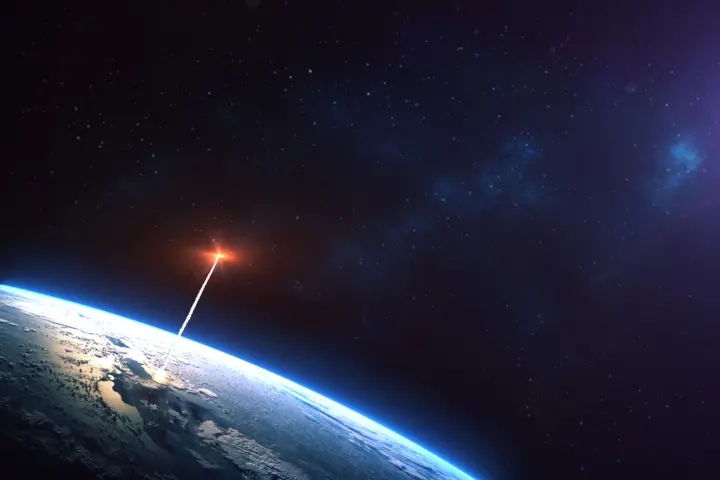


Space mechanisms with virtually no vibrations: a key requirement for modern spacecraft to perform tasks such as precise earth observation, rendezvous missions and many more.
A giant leap in micro-vibration testing of space mechanisms
ESA responded to all these developments by deciding to upgrade its micro-vibration testing facility, located on site at ESTEC (the European Space Research and Technology Centre) in the Netherlands. ESTEC – the largest of all ESA’s locations, with a workforce of over 2,500 people – is organized in various directorates, such as the Directorate of Technology, Engineering and Quality (TEC). Here, Sandro Patti is responsible for the newly developed micro-vibration test facility, known as the Mechanism Microvibration Characterization Facility (MMCF). The design, manufacture and commissioning of the MMCF were undertaken by ESA and SEREME (France) as main supplier.
Patti reports: “As part of ESA’s mechanism section, we support flight missions by offering technical design, analysis, and test support for the development of space mechanisms. Space mechanisms include equipment with relative motion between two or more parts – such as equipment driven by an electric actuator.”
ESA’s predecessor to the MMCF, the Reaction Wheel Characterization Facility (RCF) – dating back to 2009/10 – was already used for these purposes: with the help of piezoelectric load cells from Kistler, low thresholds of 20 mN or 2 mNm were achieved. In the new MMCF, planned in 2021 and operational since November 2023, four 9067C/QKI80 prototype sensors from Kistler with special PiezoStar crystals are applied. Grown in-house by Kistler, the PiezoStar series of crystals outperform naturally grown quartz crystals. Thanks also to a special cutting procedure, these sensors are ten times more sensitive than their predecessors, and their crosstalk level is three times lower. “Together with low-noise cables and electronics, the sensors played a key part in the outstanding performance of ESA’s new micro-vibration test facility”, Patti notes.
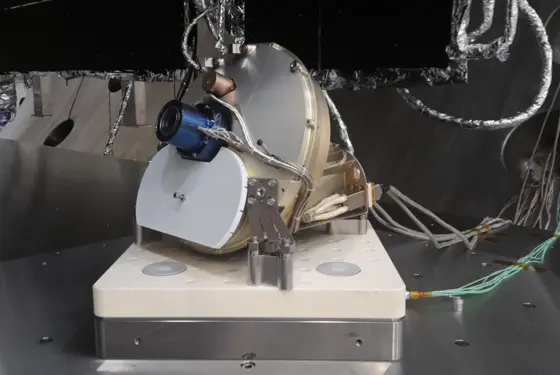
To build a dynamometer – a force plate that can measure all exported forces and torques (EFT): Fx, Fy, Fz, Mx, My, Mz in the six degrees of freedom – the four sensors are placed on a massive granite block weighing 1.37 metric tons. Below the block, there is a damping system that provides additional isolation for the dynamometer from the ground. “But that’s not all,” Patti continues. “Above the four triaxial sensors located on top of the granite block, there is a ceramic plate – with high stiffness and low weight – on which the unit under test can be placed (as shown in the photograph). We also took up a colleague’s idea to erect a kind of acoustic ‘tent’: a small cabin in the room that provides noise rejection for everything above 100 Hz.”
Lab-grown piezoelectric crystals for even higher performance
Kistler develops and manufactures its own crystals for optimal piezoelectric measuring capability.Benefits:
- Highest sensitivity (up to ten times higher than quartz)
- Lower crosstalk (up to three times less)
- Very good linearity and very low hysteresis
- Smaller preload needed
Depending on the sensor type (force, pressure, etc.), precise orientation and cutting of different crystal wafers is necessary.
Measuring ultra-low micro-vibrations from reaction wheel
Thanks to these advances together with the innovative environment and the isolation features, the new dynamometer reaches unprecedented levels of measurement accuracy. “It’s actually hard to imagine how very low these forces and moments are,” Patti points out. “For example, we were able to reconstruct what someone nearby was saying just from the measured vibrations. And then we placed an expensive modern watch on the dynamometer: it accurately captured the ticking that occurs six to eight times per second – which you could never feel on your wrist, because it’s way below 1 mN!”
To achieve this outstanding performance level for micro-vibration testing of space mechanisms, additional effort was focused on reducing the electrical noise over the entire piezoelectric measuring chain. The ESA team collaborated with Kistler to determine the noise level of the measuring system on site. With the help of special coaxial cables, a 5080A laboratory charge amplifier from Kistler and some additional technical measures, electrical noise was reduced to such an extent that mechanical noise is now the limiting factor. Last but not least, comprehensive calibration and acceptance procedures – including static and dynamic excitation as well as reference and comparison tests – were completed before the facility went into operation. A detailed account available to MMCF customers documents the facility’s high degrees of sensitivity, linearity, frequency response, and other parameters.
New ESA test facility exceeds expectations and attracts more customers
“Kistler has also been very helpful and reactive with less challenging issues such as lubrication and preloading of the sensors,” Patti reports. “Of course, we’re extremely happy with the new facility’s performance – it truly exceeds our expectations.” Thus far, antenna mechanisms, reaction wheels, and cryocooler mechanisms have been tested on the MMCF. Its high EFT resolution is prompting more and more internal and external customers to approach ESA. The acquired datasets can be used as input for analytical models and simulations that help optimize the performance and efficiency of space mechanisms and spacecraft systems. One example is performance assessment of optical instruments under the influence of disturbing mechanisms on the spacecraft.
Applications for the MMCF are not limited to space mechanisms such as reaction wheels, as Patti explains: “We’re currently looking to extend our EFT services to non-space markets as well – the semiconductor industry is just one example. It will be interesting to see who can benefit from the new MMCF – and in fact, we’re already seeing requests from other sectors and application areas.”
Need a consultation?
Our experts are just a click away.
![[object Object]](https://kistler.cdn.celum.cloud/SAPCommerce_Document_Preview/961-992e-04.26.webp "Below the perceptive threshold")